

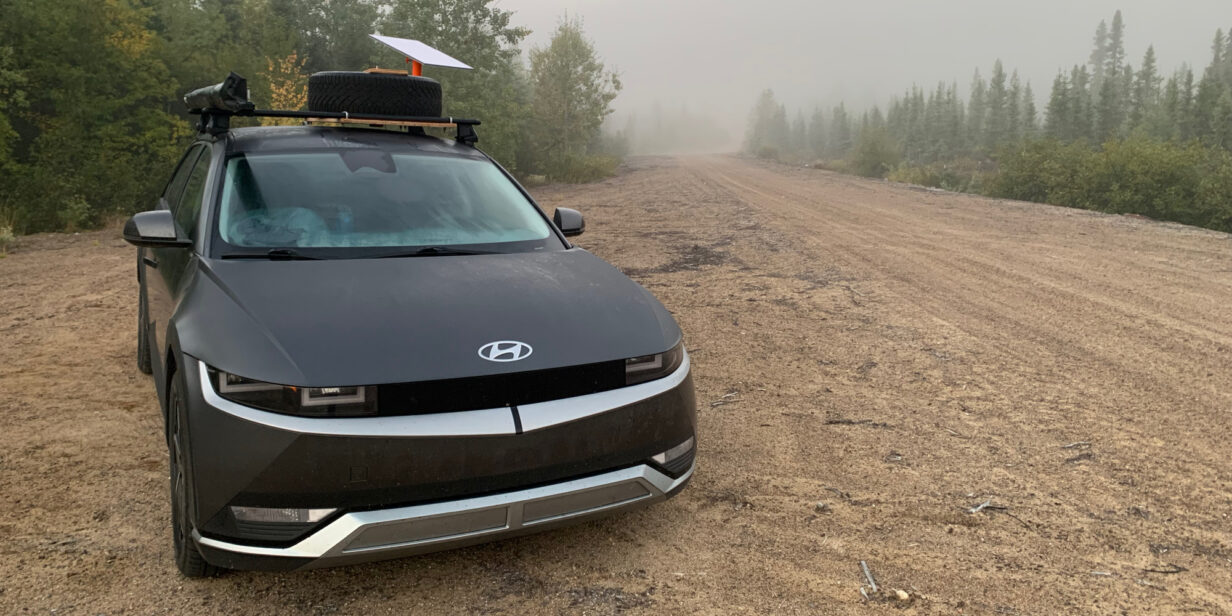
For this trip, I decided to push things a little further and take Route 389 all the way to Labrador City. The goal: reach Fermont — a truly one-of-a-kind town — while testing my self-sufficiency setup far from regular services, surrounded by nature and vast open spaces. And this time, as an extra precaution, I even built a rooftop platform to carry a full-size spare tire. When you head into this kind of remote territory, it’s better to be self-reliant in more than one way.
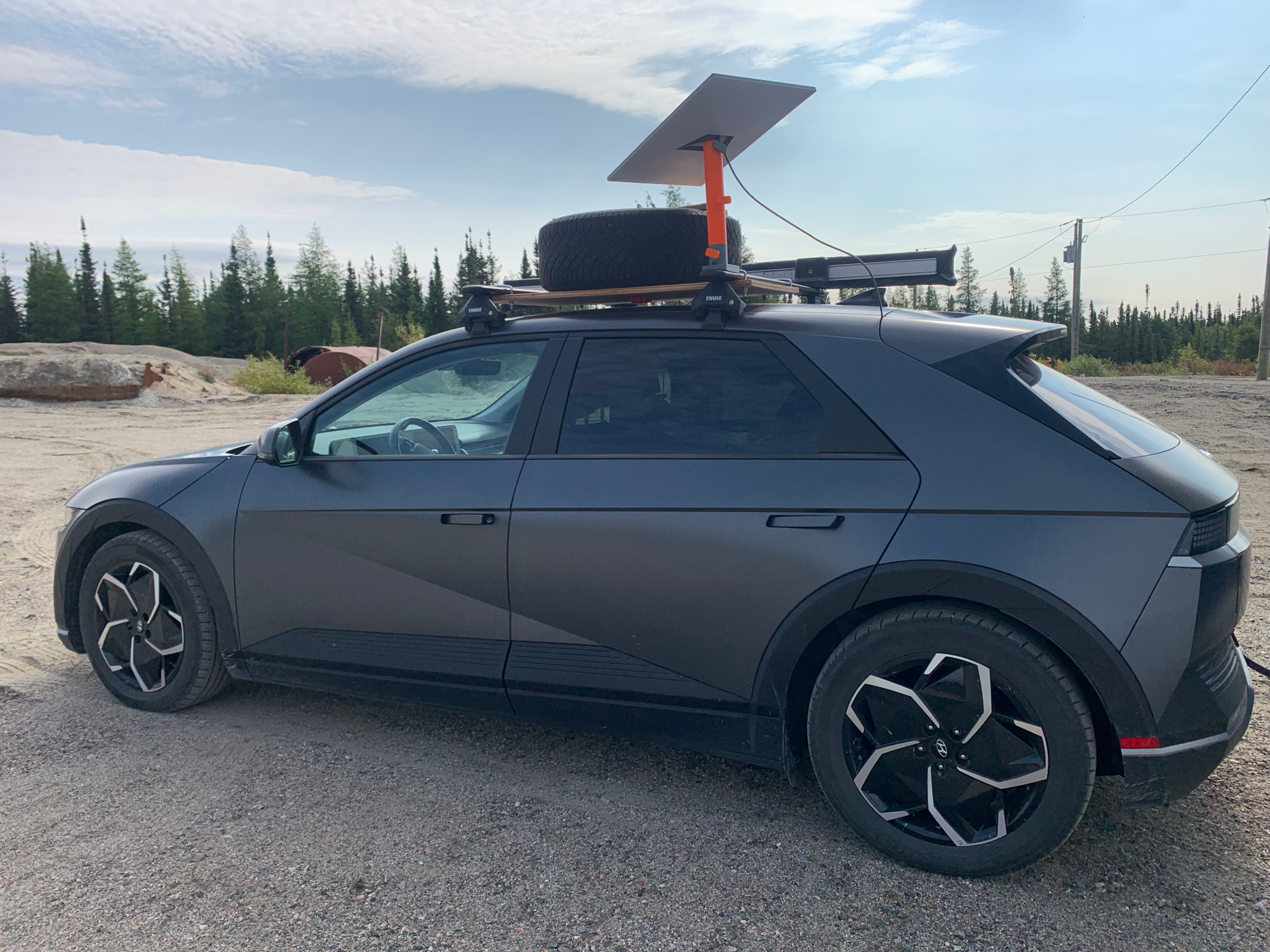
I broke the trip into three main sections:
Montréal → Baie-Comeau
No charging challenges here. There are now plenty of fast and ultra-fast chargers all along the route. With Plug&Charge enabled on the Circuit Électrique network, the whole experience is almost too smooth: plug in, and it just works.
Baie-Comeau → Manic 5
This section is fully paved but very winding. If you’re prone to motion sickness, consider bringing some Gravol.
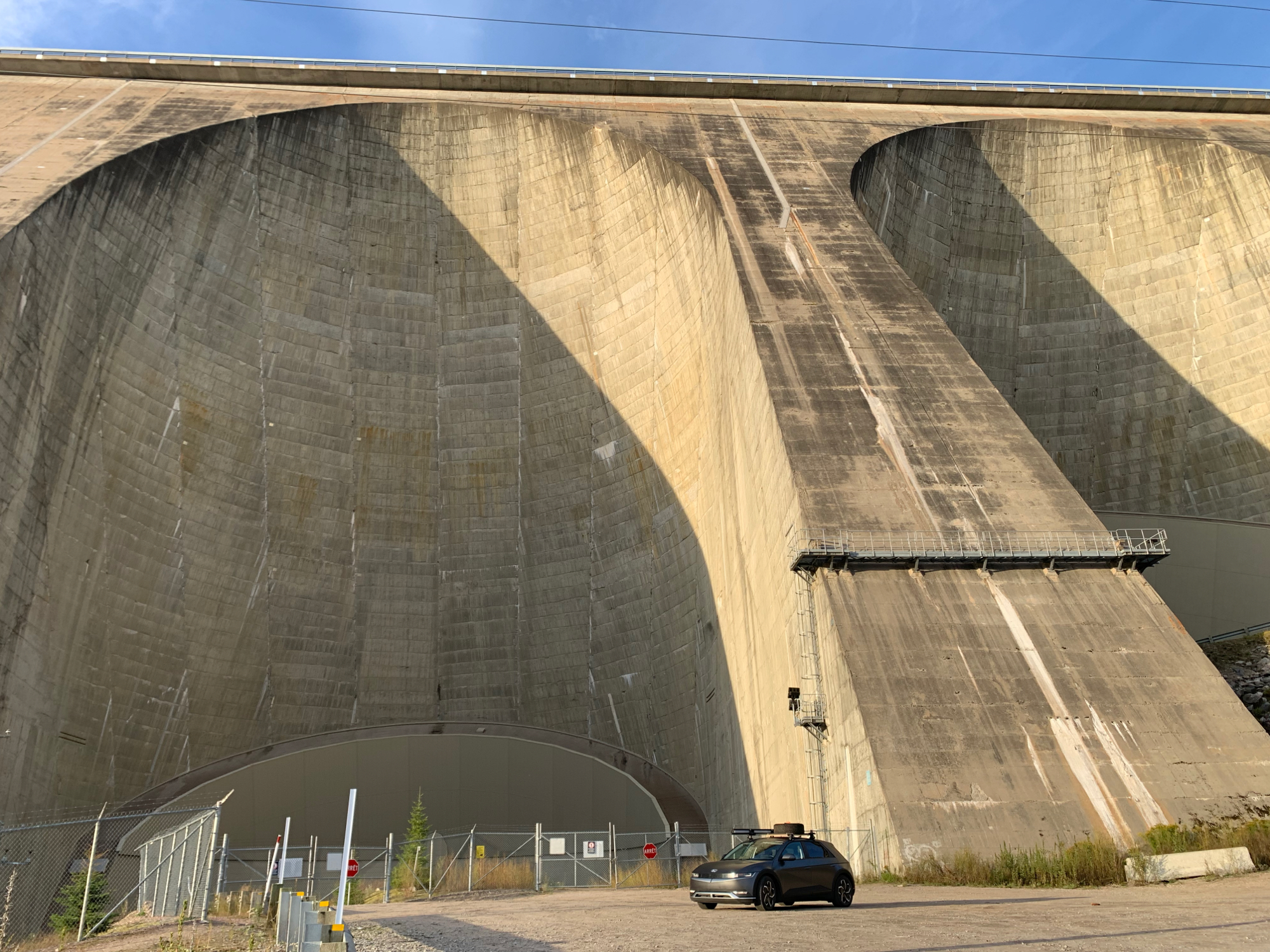
Once you reach the Manic-5 dam, it’s basically Disneyland for EVs: 24 kW, 50 kW, 100 kW, 180 kW, and even 320 kW chargers. It’s the perfect place to top up before entering a stretch where things get a bit more… “interesting.”
Manic 5 → Fermont
This is the most rock’n’roll part of the trip.
Manic-5 → Relais Gabriel
Roughly 100 km of gravel road — sometimes well-maintained, sometimes really rough. While passing a pickup, a solid rock hit my windshield… part of the adventure, I guess.
At Relais Gabriel, there’s a charger powered entirely by solar panels with a large battery bank. It’s an impressive installation — kudos to Circuit Électrique.
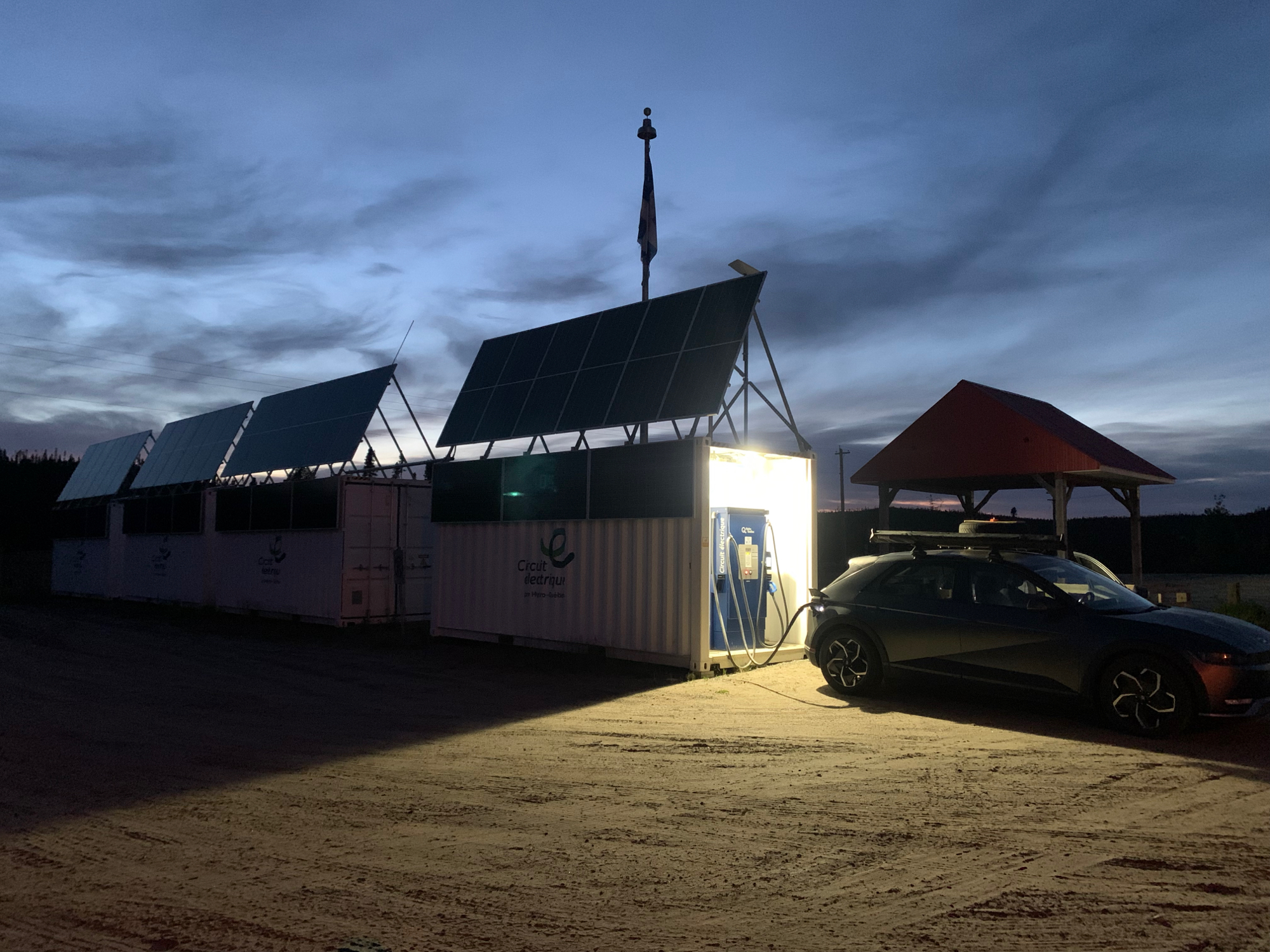
A small technical quirk: because the station runs exclusively on solar-charged batteries, it goes into a deep-sleep mode when not in use to avoid wasting energy. When you arrive, it genuinely looks like it’s turned off.
You have to press a dedicated activation button to manually wake it up. It then takes a few minutes to start up and check its available energy before allowing you to charge. It’s a bit surprising the first time, but it’s part of the charm — and the limitations — of an off-grid setup.
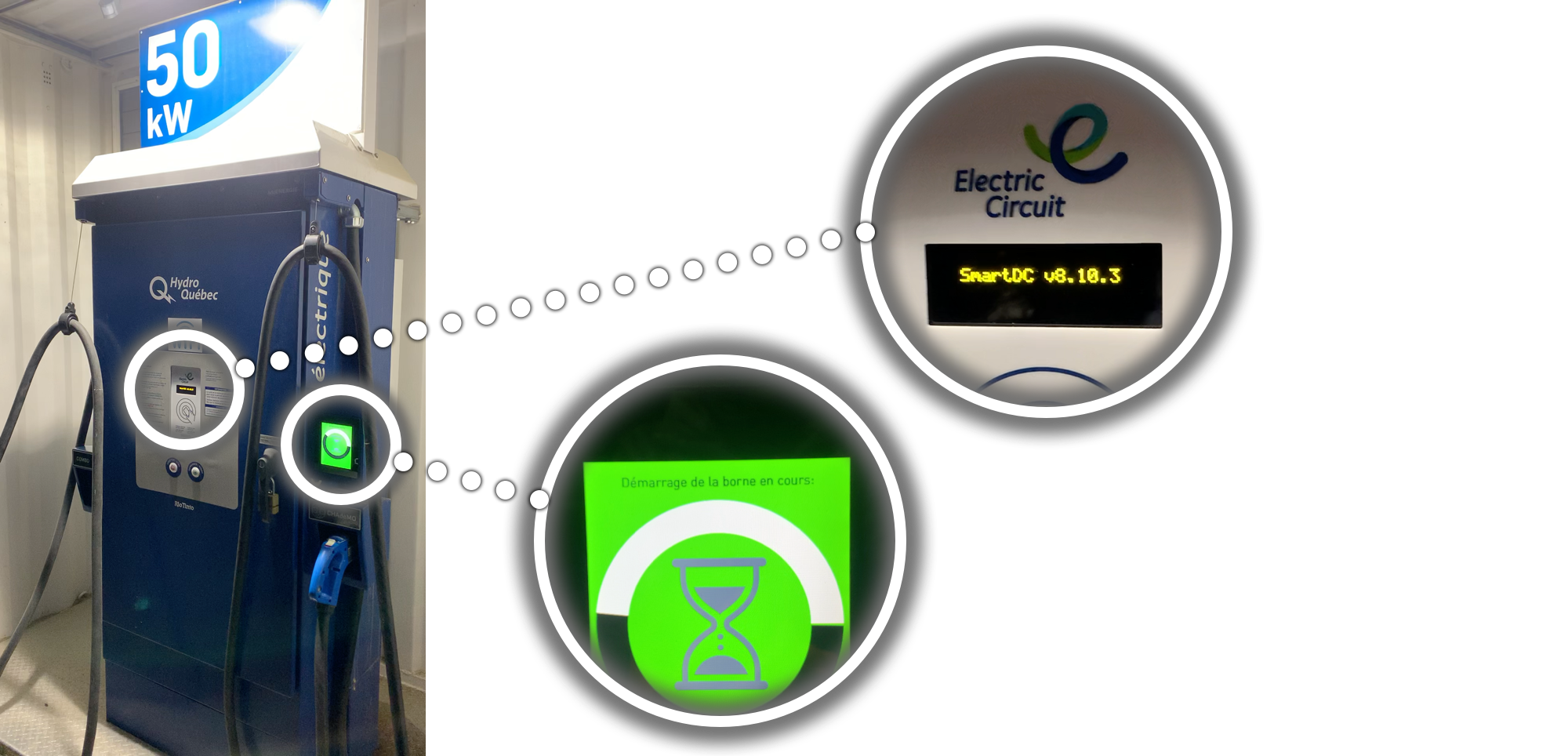
One crucial thing to remember: charging here really depends on the weather. In high season and sunny conditions, everything’s fine. Off-season or after several days of rain, the station might not have enough energy to give you a full charge — or any charge at all.
I was lucky to arrive when the batteries were topped up. I fully charged, then stayed a few days to hike in the Monts Groulx and fish in the surrounding lakes.
It rained almost nonstop. I relied entirely on the car’s battery for heating at night (around 5°C), cooking, the fridge, Starlink… While staying parked, I used about 13% per day, which is actually quite reasonable.
Before heading toward Fermont, I returned to the station to top up again… and surprise: after several rainy days, the reserve was low. I was able to get a small boost, but anyone arriving after me probably would’ve been disappointed.
So plan carefully if you’re heading through that area.
Relais Gabriel → Fire Lake
From here, it’s all pavement again — almost luxurious compared to the previous stretch.
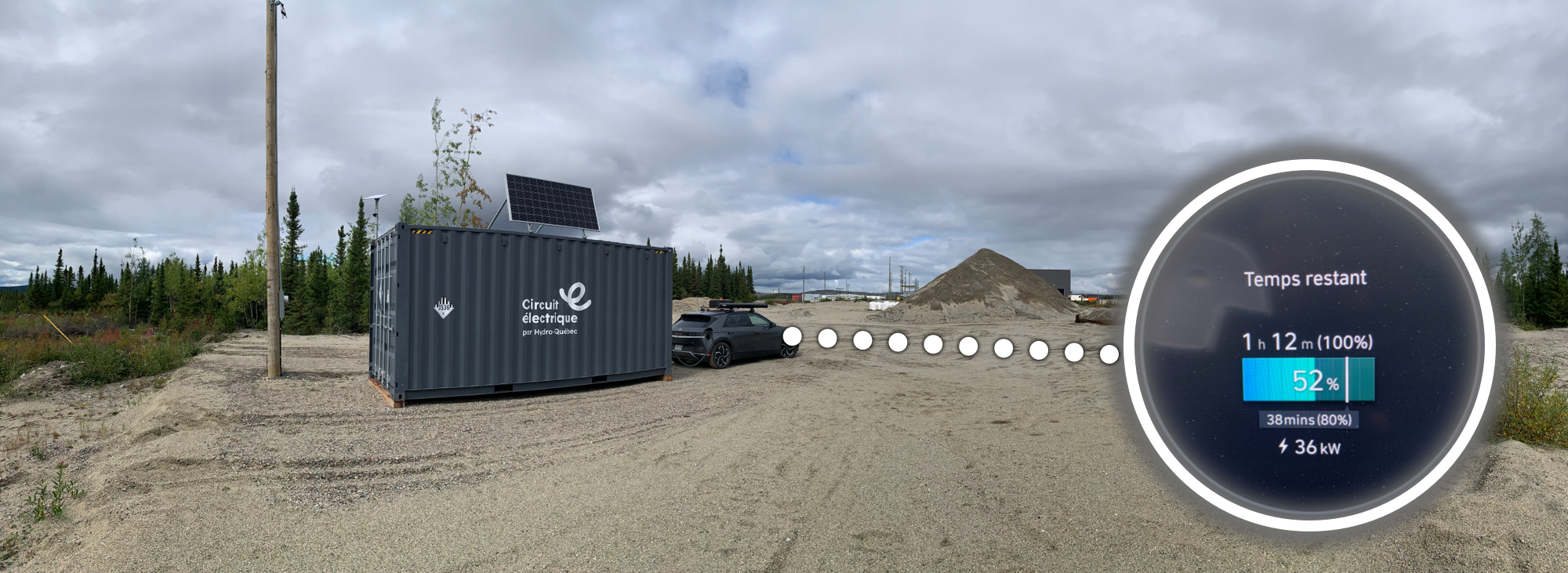
The road leading to the Fire Lake charging station is well signposted, but you still need to drive on a dirt road through mining facilities to reach it.
This charger also uses a battery reserve, but unlike Relais Gabriel, it recharges through a small connection to the Hydro-Québec grid. It’s a clever hybrid system. Power is limited to 36 kW… but honestly, in the middle of nowhere, 36 kW feels wonderful.
Fire Lake → Fermont
The road switches back to gravel. The contrast is striking: you really feel like an electric alien in an environment dominated by pickups and massive mining trucks.
At Mont-Wright (about 20 km before Fermont), the pavement returns — finally.
Stay in Fermont
I set up at the local campground for a few days to explore the area.
As for charging… let’s just say it’s still far from ideal. At the time of my visit, there were no chargers available in Fermont. The only option was a single ChargePoint unit in Labrador City.
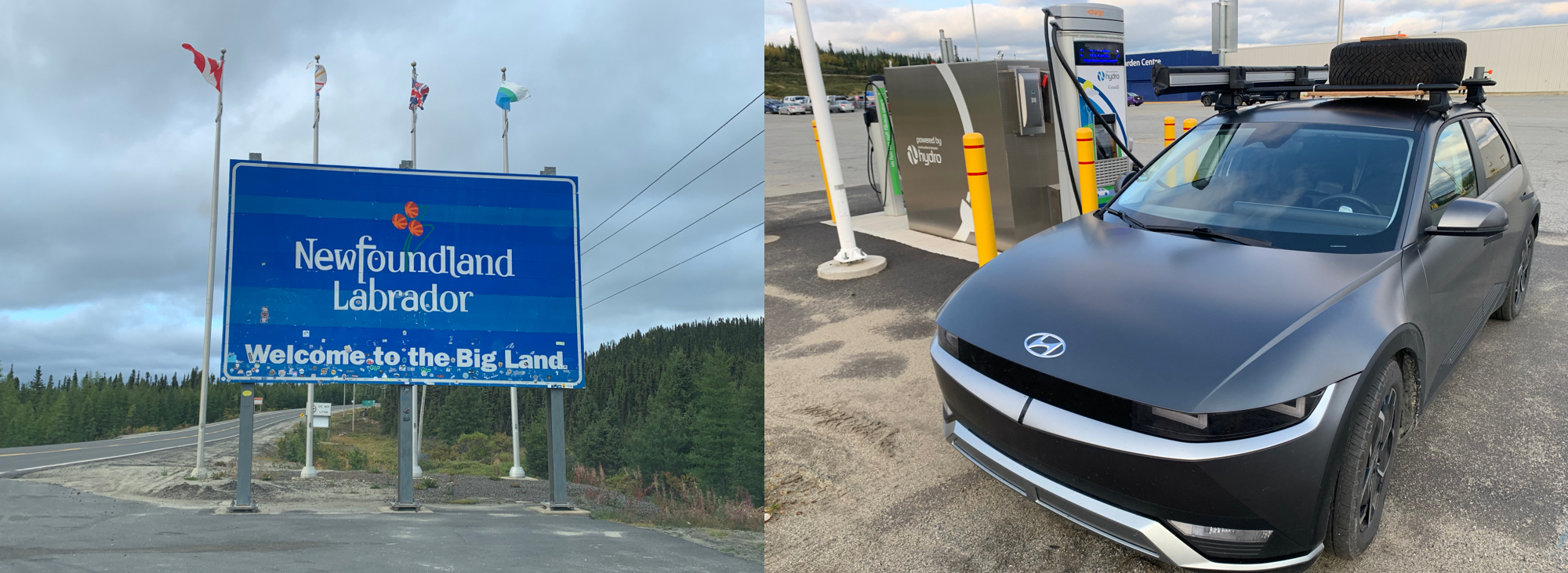
However, I did see a new Circuit Électrique station under construction in the parking lot next to Fermont’s iconic “Wall.” Once it’s live, it will completely change the dynamics of the trip.
Conclusion
This trip to Fermont reminded me how remote roads demand a very different kind of planning when driving electric. In most of Québec, charging has become almost effortless, but Route 389 is still an exception where range, weather, and road conditions can really influence your journey.
Is it doable with a modern EV? Absolutely. Is it as easy as driving Montréal–Québec on the highway? Not even close. You need to be ready for surprises, respect the limits of off-grid chargers, and accept that a few days of rain can completely change your plans.
But that mix of adventure, technology, and isolation is exactly what makes the experience memorable. Reaching Fermont after driving through those raw landscapes gives you a real sense of accomplishment — and proves that electric mobility can take you much farther than most people imagine, as long as you stay realistic and prepared.